Wallets & Transfers
Balances, top-ups, transfers and transaction history kept in step with the server.
Money Apps People Can Trust
DPX are fintech app developers in Nigeria, building wallet, payment, savings, investment and lending apps for Android and iOS. We integrate Paystack and Flutterwave, build KYC with BVN and NIN verification, and design for security from the first screen. Android apps start from ₦1,300,000, with the source code, servers and store accounts in your name.
Fintech apps from DPX start at ₦1,300,000 for Android and ₦1,500,000 for iOS, with features priced on top: a Paystack or Flutterwave payment gateway from ₦300,000, user accounts from ₦200,000 and an admin dashboard from ₦400,000. Most projects take 6 to 12 weeks. Every quote is itemised, and the source code, servers and store accounts are in your name.
Balances, top-ups, transfers and transaction history kept in step with the server.
Card, bank transfer and USSD payments, confirmed before any balance changes.
Goals, scheduled contributions, portfolios and recurring plans.
Applications, approvals, repayment schedules and reminders.
BVN and NIN checks through your chosen provider, with tiered limits.
PINs, biometrics, audit trails and data handling shaped by the NDPA 2023.
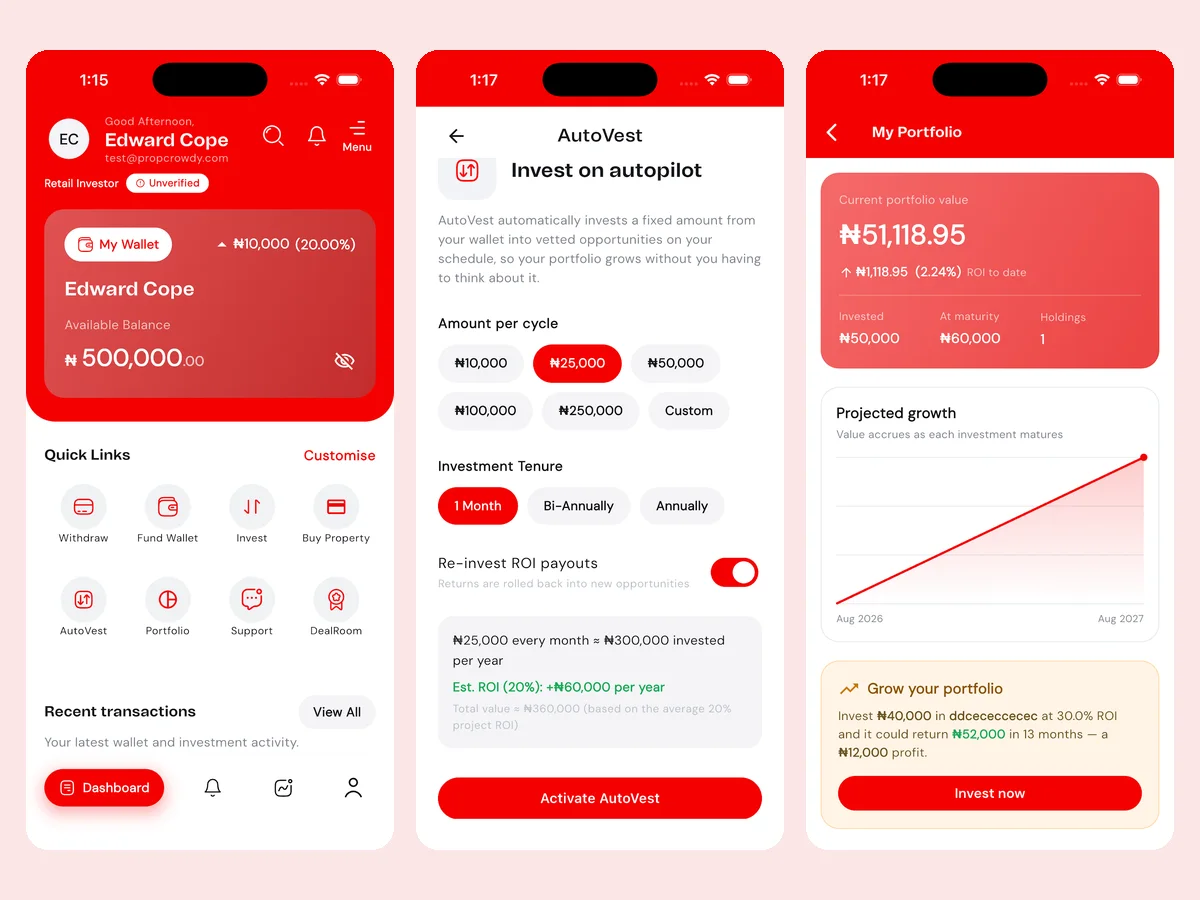
Real estate investment app with a wallet, investing in vetted property developments, AutoVest automatic recurring investing, and portfolio and projected growth.
Live on Google Play ↗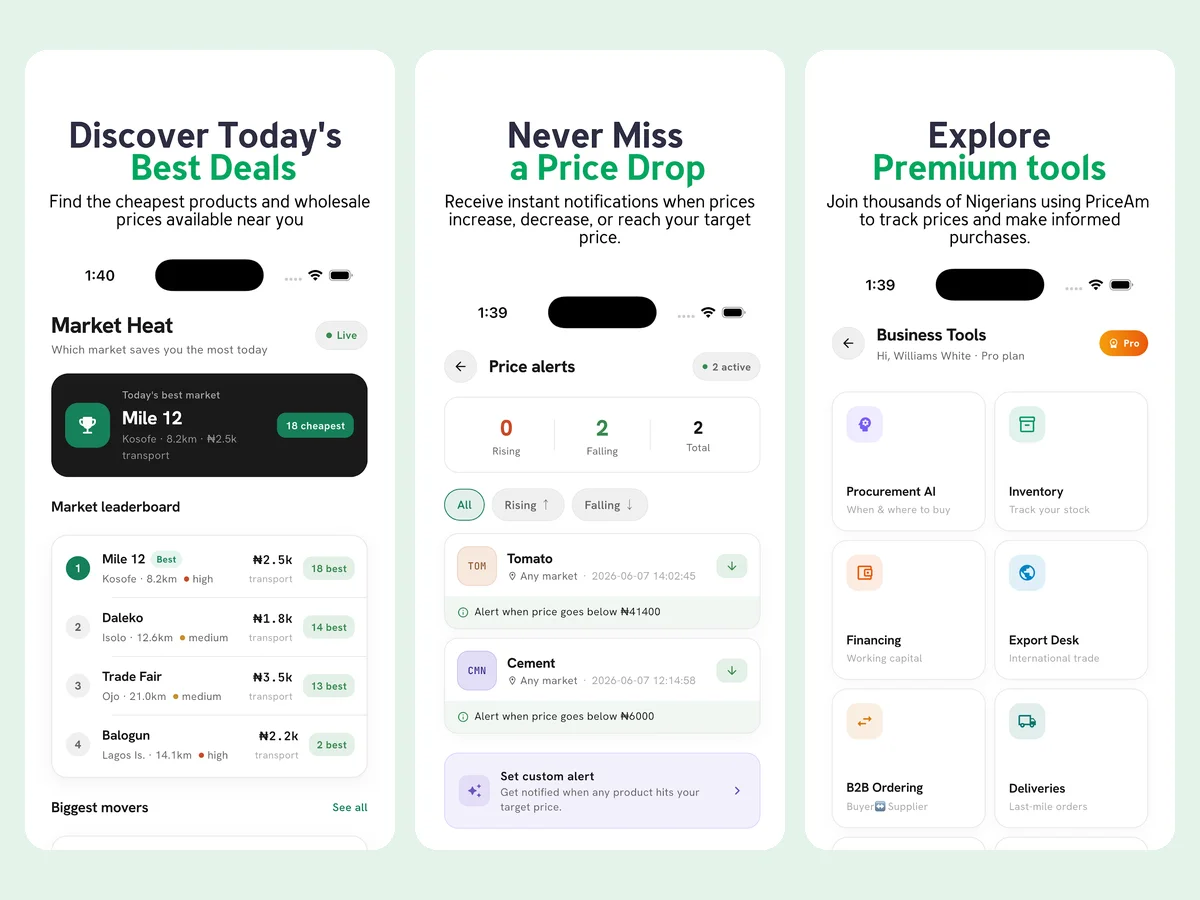
Market price discovery app comparing prices across Lagos markets, with price-drop alerts, watchlists, business tools and financing information.
Live on Google Play ↗We map how money enters, moves and leaves the app, then agree an itemised scope and price.
User flows, wireframes and a clickable prototype, including onboarding and failed payments.
App, server and admin dashboard built in milestones and tested against the gateway sandbox.
Store listings and review submission handled, with maintenance offered after launch.
As a fintech app development company in Lagos, we design and build the products Nigerian founders are launching: wallet apps that hold a balance and move money between users, payment and bill-pay apps, savings apps with goals and scheduled contributions, investment apps with portfolios and recurring plans, and lending apps that take an application, show repayments and send reminders. Each one has two sides: the app your customers use, and the admin dashboard your team uses to approve, review and reconcile. We start from the money flow, not the screens. PropCrowdy, a real estate investment app we built and published on Google Play, combines a wallet, investing in vetted property developments, AutoVest for automatic recurring investing, and a portfolio view with projected growth.
Most Nigerian fintech apps collect money through Paystack or Flutterwave, and we integrate either, or both, for card, bank transfer and USSD payments. A payment gateway is priced from ₦300,000 because the work is more than a pay button: confirming each payment on the server rather than trusting the phone, handling the gateway’s notifications, dealing with failed payments, and keeping the wallet balance in step with what the gateway actually received. Transaction history, receipts and refunds are designed as screens, not afterthoughts. Most users are on mid-range Android phones and patchy networks, so we design for the payment that times out halfway: the app tells the user clearly whether their money left, and one tap never becomes two charges.
Onboarding is where fintech apps win or lose users. We build the KYC flow as a feature of your app: collecting the customer’s details, verifying a BVN or NIN through the verification provider you sign up with, capturing an ID document and a selfie where your rules require it, and holding back features such as withdrawals until each tier of checks is passed. Your compliance team gets an admin view to review flagged accounts and see why a check failed. We keep the steps short and explain each one, because a customer who does not understand why you want their BVN simply leaves. The verification provider and the rules about what to check are yours; we build the flow around them.
An app that holds money has to be built defensively from the first screen. That means a PIN or fingerprint to open the app and approve transactions, sessions that expire, every balance calculated on the server, encrypted connections, backups, and user roles with audit trails on the admin side so you can see who changed what. Personal data in Nigeria is covered by the Nigeria Data Protection Act 2023, so we collect only what the product needs, show a clear privacy notice and ask for consent, and store sensitive data with restricted access. The servers and databases are set up in your name, so your customers’ data is held under your control, not ours.
Many fintech products need a CBN licence or a licensed partner, such as a bank or licensed payments company, before they can hold customer funds or lend. Getting that licence or partner is your responsibility; DPX builds the product, and we design it so your partner’s requirements fit in. On cost, Android apps start at ₦1,300,000 and iOS apps at ₦1,500,000, with features priced on top: user accounts from ₦200,000, push notifications from ₦150,000, payments from ₦300,000 and an admin dashboard from ₦400,000. Every quote is itemised. Most projects take 6 to 12 weeks, store publishing is included, and you own the source code, store accounts and servers. Maintenance is offered after launch.
Client perspectives
Since our new store launched, sales have increased by 50%. The checkout experience is seamless and our customers love it.
Android apps start at ₦1,300,000 and iOS apps at ₦1,500,000. Features are priced on top, such as payments from ₦300,000 and an admin dashboard from ₦400,000, and every quote is itemised.
No. DPX builds the app. If your product holds customer funds or lends money, you will usually need a CBN licence or a licensed partner, and arranging that is your responsibility. We build to the requirements your partner sets.
Yes, either or both, for card, bank transfer and USSD payments, with every payment confirmed on the server before a balance changes.
Yes. We build the KYC flow and connect it to the verification provider you choose, with an admin view for reviewing flagged accounts.
Most projects take 6 to 12 weeks, depending on scope. You get the timeline in writing with the quote.
You do. The source code, store accounts, servers and databases are in your name, and the app is published under your own developer accounts.